You talk. It answers.
Say «Roan» and talk in your own words, in the room or at the tablet. There are no commands to learn.
An operating system made to be led by a person.
Inside, a team of AI agents works by written rules. Outside, there is you: you talk, it answers, it asks for your yes when it matters. It runs our own studio, every day.
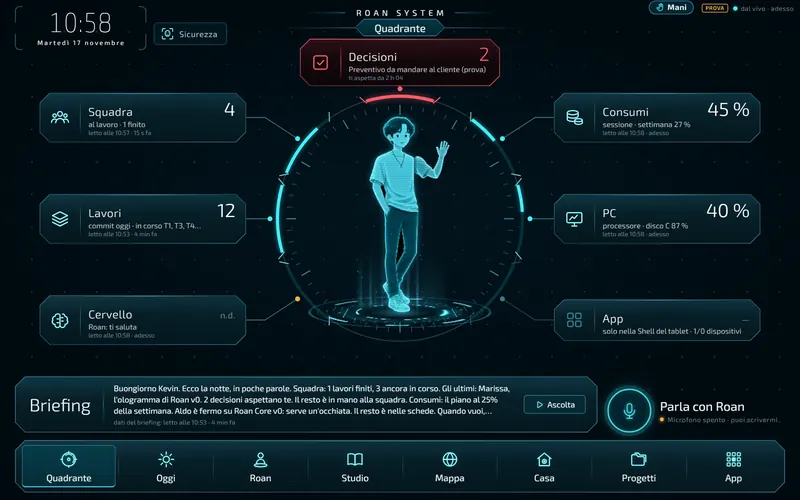
At a glance
Say «Roan» and talk in your own words, in the room or at the tablet. There are no commands to learn.
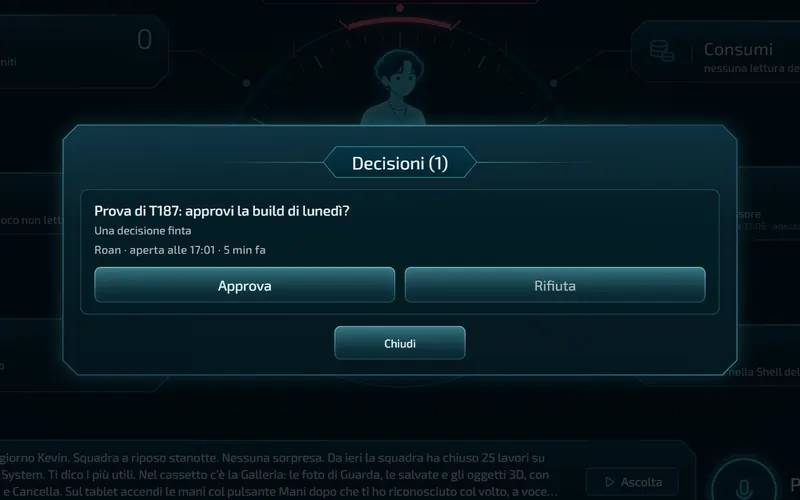
Spending, accounts and publishing never start on their own. «Approve» or «Reject»: you decide.
With the exact words, the date and the source. The agents look it up before they start a job.
The brain lives on a computer of yours. Speech is transcribed there, and nothing is exposed to the internet.
The Roan OS film
There is an Office film too, the studio in 3D: Come and watch us work (5:31)
How it works
1
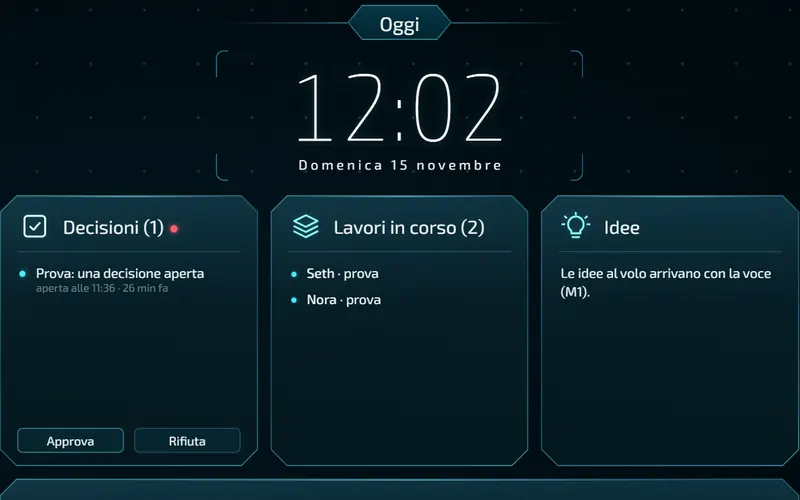
Your voice is transcribed on your computer, not by an online service, and the answer comes from the speaker closest to you. In the morning it tells you what happened since last time.
2
The system acts on its own on almost everything, and stops on the things that matter. A spoken order counts only if the voice is the right one; any other voice is conversation.
3
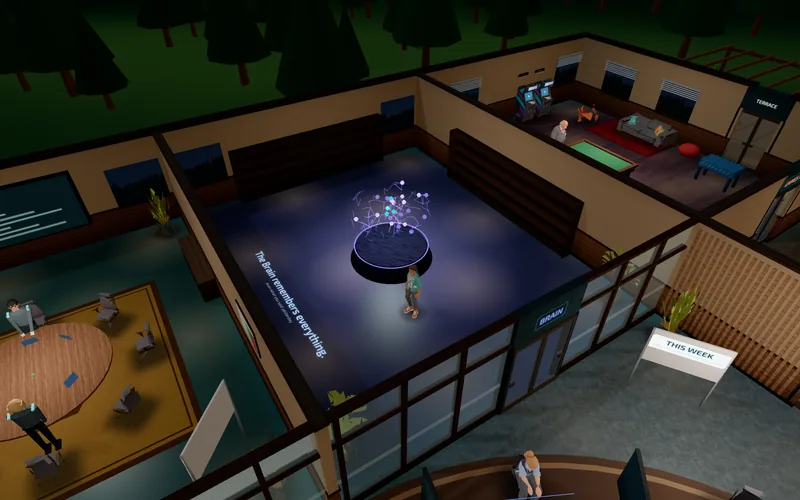
Every decision stays written down with its date and time. So nobody asks the same question twice, and nobody reopens a closed matter by mistake.
4
Nothing enters the running system without a security check by an agent other than the one who built it. Going back to the previous version is always possible.
What it does today
Roan OS is a system of several devices: the brain runs on a computer of your own, and around it are the tablet, the TV, the phone. This is what it does today.
You say “Roan” and talk, in the room or to the tablet, in your own words: there are no commands to learn. It answers where you spoke. Speech recognition and its voice run locally, and no audio is sent out.
When something important can't wait, the agent phones you and tells you out loud: a job finished, a client arriving, a server emergency, even at midnight. You can ask it to call you. And you write to it from a messaging app, wherever you are: alerts, job results and its voice notes reach your phone.
In the morning it tells you out loud what has happened since the last briefing: the news that matters spoken, the rest on screen.
The important choices wait for you: Approve or Reject, with a confirmation. The machine doesn't decide on its own.
The Brain keeps every decision with the exact sentence, the date and the source. You can query it by voice, look at it in 3D, and ask of any decision where it comes from.
The agents at work, each on its own brief, and how much the team has worked this week: real status, read at the source.
In front of the camera you give commands in mid-air: the index finger moves the cursor, a pinch is a click, an open hand goes back. The device works the gestures out itself: no image leaves it.
A photo becomes a 3D object in about 14 seconds. Objects, the computer and the memory can be viewed in 3D, and with a transparent pyramid on the screen they float in the air.
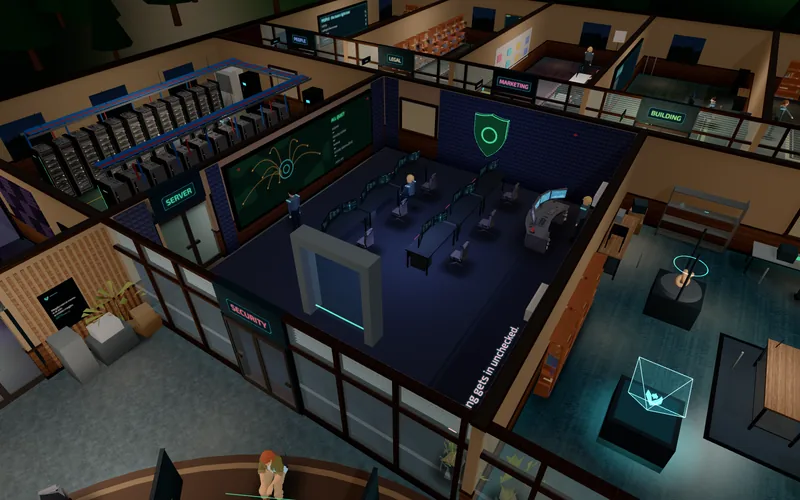
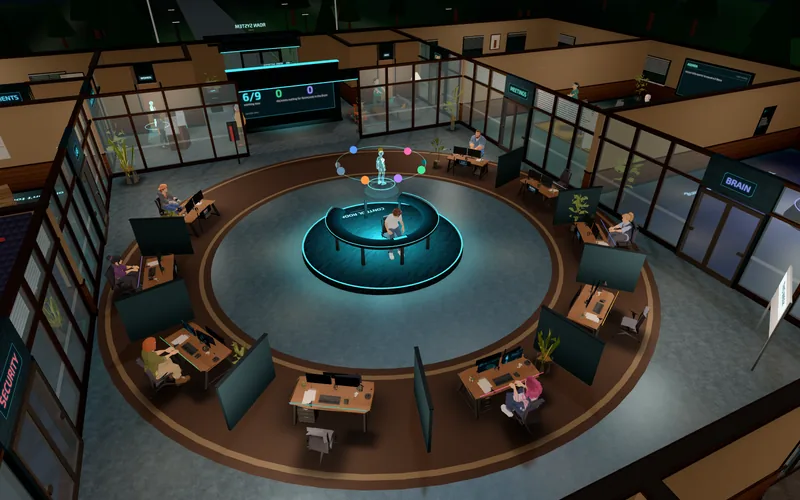
The studio in 3D, where you can see who is working on what. You can walk into it, too.
The same system on the computer, the tablet, the TV and the phone. The devices talk over an encrypted private network: nothing is exposed to the internet.
Ask Roan where the tablet is and he makes it ring, even on silent.
Security
A system that can act has to know who is talking to it, and stop when it doesn't. Roan OS has more than one line of defence, and they work together. We say what is there, not how it works in detail: that part stays with us.
The system recognises the voice of whoever is allowed to give it orders. It answers anyone else, but it doesn't act: a voice it doesn't know is conversation, nothing more.
The tablet opens only when it recognises the face of someone allowed to use it, and a photograph isn't enough. Recognition happens on the device: no image is sent anywhere.
Every device has its own level: some read, some talk to Roan, some can give commands, always with a confirmation. A new device starts at the lowest level.
If someone tries to get in and fails, the alarm goes off: the siren, a screen that says so plainly, and an immediate alert to whoever answers for the system.
Spending, accounts and publishing never go ahead on their own: they wait for a person's approval. Access and permissions never change by voice, not even with the right voice.
Nothing enters the live system without a security review by an agent other than the one who built it. The system only starts from an approved version, and it can always go back to the previous one.
Speech is transcribed locally, the central service is not exposed to the internet, and every night an encrypted backup runs, with a restore we have tested.
The editions
The editions for people and for companies will soon be for sale, once stability, editions and price are ready. Each one is prepared together with the people who will use it.
An assistant you talk to, built around the rhythm of your life, your commitments and your goals. It asks permission before touching anything that matters, and it runs in your own home.
Notify meAn agent for whoever runs the business and, where it helps, one for each member of staff, coordinated with one another. The approvals stay with whoever runs the business, and the system runs on the premises.
Notify meA coordinated team of agents, with separate roles, approvals and a record of who did what, built around that company's own data rules. Every employee can have a dedicated agent.
Let's talkThe one we work with, the most advanced. It is the test bench everything goes through before it reaches the others.
Specifications
Write us two lines about who you are and how you work: we will let you know when your edition is ready. A person answers.